Tuesday, June 2, 2015

Event II: Infinity Structures: Paradoxical Spaces by Robert Gero

I attended Robert Gero’s exhibit expecting something similar to Kathy High’s exhibit: a collection of diverse components playing to a major theme. Therefore, I was quite surprised and even a little perplexed at the overall simplicity of Infinity Structures. Just standing at the doorway you could see the whole exhibit: an intricately designed maze of white Styrofoam beams highlighted with pillows propped up in random corners, no explanation in sight. In the background played a low rumbling but unobtrusive audio track.

View from the entrance
Source of inspiration
I realize that using “simplicity” to describe the overall exhibit discredits the intricacy of the architecture and composition. Gero aimed to create a finite infinity, or a constant container housing infinite permutations of repetition. He utilizes props and draws inspiration from the scene of his exhibitions. The pillows were taken from a back room in the CNSI building, and the staircase outside inspired the very contents of the room. 


Section most resembling stairs
As a math major, I really enjoyed the geometric intricacy of the exhibit, the sharp edges contrasted with the soft formless pillows. A panning light highlighted this, creating infinitely more geometric shadows on the wall. The audio created a pulsing feeling, a feeling that when combined with the panning light created the impression that the structure was growing and shrinking within its confines.


A infinite pulsing feeling
Formless accent pillows 
 There are elements of philosopher Spinoza’s thoughts in Gero’s work. Spinoza considered infinity not necessarily as a numerical infinity, but rather a totality (Shein). Gero incorporates this by creating one unchanging structure, “totality,” but an infinitely changing interior. This intersection of the two cultures is something I want to see more of in future art and science. As a math major, I have realized the omnipresence of infinity and practical importance of being able to visualize it. In physics, infinity can be observed in black holes. In academia and applied sciences, long-term effects are often predicted by imposing a limit on infinity. I believe the increased presence of science in art will allow those who aren’t trained in the discipline to understand the otherwise highly technical work.


Shein, Noa. "Spinoza's Theory of Attributes." Stanford University. Stanford University, 3 Feb. 2009. Web. 2 June 2015. <http://plato.stanford.edu/entries/spinoza-attributes/>.


"EXHIBITION: Infinity Structures: Paradoxical Spaces by Robert Gero | UCLA Art | Sci Center Lab." UCLA Art | Sci Center Lab. Web. 2 June 2015. <http://artsci.ucla.edu/?q=events/exhibition-infinity-structures-paradoxical-spaces-robert-gero>.

Monday, June 1, 2015

Event I: Waste Matters Exhibit by Kathy High

Prior to attending the actual exhibit, I had attended the review session in which Professor Vesna and a couple biology students debated over the artistic and scientific values of Kathy High’s work. It was definitely helpful having a little background about Crohn’s disease and the overall exhibit before seeing it.

Ceramic feces preserved in honey

Walking into the exhibit, the first thing I see is the flagrant exhibition of feces preserved in honey. High explores the intersection of BioTech + Art with her bold letter to David Bowie asking for his feces for use in fecal transplant. While some of the students argued that the use of ceramic feces as opposed to actual feces takes away from it’s artistic value, I felt that the feces didn’t have to be real to be provocative. As grotesque as it was, I was reminded of the reactions to Eduardo Kac’s GFP Bunny, “interesting but silly.” I think ultimately we should focus less on the intrinsic value of the work, but rather its impact in raising awareness about the rare Crohn's disease.

The backdrop is a video of a windup toy pooping as it walks, bringing humor to a normally avoided topic of conversation

There are some in the artistic and scientific community arguing that High is overstepping her boundary, that she doesn’t have the right to ask a celebrity for her fecal transplant. Other controversy surrounding this exhibit is that it glamorizes and oversimplifies Crohn’s disease. However, basic statistics states that the chances of a match between her and Bowie are no more and no less than her and any other person, and I believe that by this principle, she is entitled to ask whoever she wants. Many of the students viewing the exhibit were also curious about need for someone else’s feces, so I feel that this exhibition has really been successful for increasing knowledge about Crohn’s disease and fecal transplants.

Oliver Kelhammer's Re-mediator Series
My favorite part of the exhibit was the series of images feature the gut as a happy ecosystem. The laughing and playing children symbolized the equilibrium achieved as a result of the healthy green flora in the intestines. If I could talk to the collaborator Oliver Kellhammer, I would definitely ask about the significance of having some aspects of the images in pixelated low resolution.

Although this exhibit is now over, I would’ve recommended it to other classmates for it’s exploration of the topic in many mediums (ranged from sculptures to photography and videos) and to learn more about the significant of fecal transplants in Crohn’s disease.


"EXHIBITION: "Waste Matters: You Are My Future" by Kathy High | UCLA Art | Sci Center + Lab." UCLA Art-Sci Center, n.d. Web. 17 May 2015.

Sukay, Sierra. "Bioremediation in the L-lot." The Sanctuary for Independent Media. 18 Nov. 2014. Web. 1 June 2015. <http://www.mediasanctuary.org/blog/bioremediation-l-lot>.


"Crohn's & Colitis." CCFA: What Is Crohn's Disease. Web. 1 June 2015. <http://www.ccfa.org/what-are-crohns-and-colitis/what-is-crohns-disease/?referrer=https://www.google.com/>.

Sunday, May 31, 2015

Week 9: Space + Art

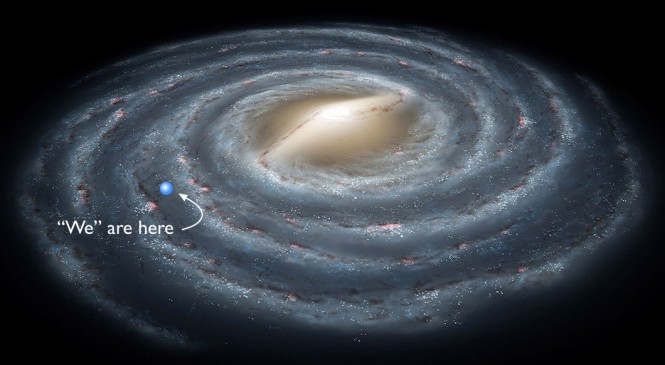
Having taken ASTRO 3 at UCLA this past quarter, I was excited to see how the Space + Art unit would manage to represent the vastness of space in art. The Power of One video was a good start, illustrating exactly why space amazes me. Zoomed out at 10^24 meters, our entire galaxy is a dust particle. I feel like it’s hard for the individual to feel significant when everything else is so big, but like art, our existence is justified if we can create just a small bit of value for those around us.
 
Earth relative to the Milky Way

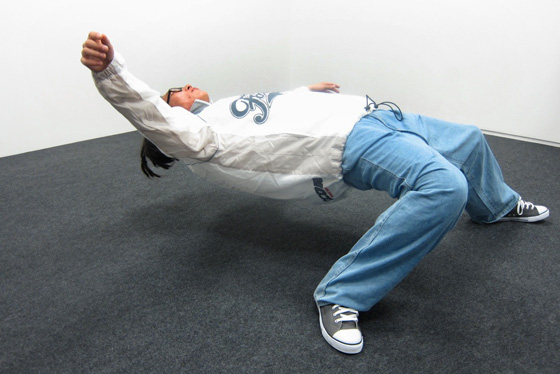
My qualm with this unit’s lecture is that it focused more on the history and current movements in space rather than the intersection of space and art.  While it was interesting hearing about the increased privatization of space exploration (or as some cynics refer to it, exploitation), I was much more fascinated by the additional artists. My favorite exhibition was Dancing on the Ceiling: Art and Zero Gravity because it explored space not necessarily as outer space but rather spatial presence.  In Xu Zhen’s In Just A Blink of The Eye, Zhen suspends a performer to create that split second moment before falling to comment on the in between state of marginalized communities in China. Similarly, Darzacq’s photography shows street dances right before they hit the ground as commentary for how society neglects its youth. I enjoyed how intense all the individual pieces were, but my favorite part was the subtle social commentary that went unnoticed without more artist background.

Darzacq's La Chute
Zhen's In Just A Blink of the Eye

 Another project that I found intriguing was the Cosmic Dancer project. The Cosmic Dancer is a small painted geometric sculpture designed to serve as an “aesthetic contribution to the cosmonauts’ living quarters" (Woods). I hope that in the future, we can see more art that explores and pushes the limitation of gravity.  

Wood's Cosmic Dancer


Office, Eames. "Powers of Tens (1977)." YouTube. YouTube, 1977. Web. 1 June 2015. <https://www.youtube.com/watch?v=0fKBhvDjuy0>.

"Dancing on the Ceiling: Art & Zero Gravity Curated by Kathleen Forde : EMPAC Curtis R. Priem Experimental Media and Performing Arts Center : Troy, NY USA." Dancing on the Ceiling: Art & Zero Gravity Curated by Kathleen Forde. Web. 1 June 2015. <http://zerogravity.empac.rpi.edu/>.

Vesna, Victoria. "Space Pt. 5." YouTube. YouTube. Web. 1 June 2015. <https://www.youtube.com/watch?v=WnSUHMXBmdg>.

Woods, Arthur. "Cosmic Dancer - A Space Art Intervention by Arthur Woods." The Cosmic Dancer Project : Arthur Woods. Web. 1 June 2015. <http://www.cosmicdancer.com/>.


Clar, Richard. "Richard Clar and Art Technologies, a Collaboration between Space Technology and the Arts." Website of Richard Clar and Art Technologies. Web. 1 June 2015. <http://www.arttechnologies.com/>.

Sunday, May 24, 2015

Week 8: Nanotechnology + Art

This week’s topic of Nanotech + Art was by far the most interesting, for it managed to elaborate on a few of the prior topics as well as relate to our everyday lives.

Fractals in shells 
When we explored mathematics in nature, the underlying explanation for the resulting beauty is structure. The nanotech lectures elaborate on this, and we learn that the self-assembling nature of molecules is responsible for the fractal nature of trees and shells.  Delving deeper into the topic of self-organization, we find that a property of nanotech called morphogenesis can also be observed in the elegant yet practical animal behaviors in nature. In a survival response, birds will manage to condense into a group to appear bigger and more threatening to a predator. What amazes me about nanotechnology is how it is both a beautiful piece of artwork on a molecular level and practical and versatile on a macro level.

Flocking birds, an example of self assembly in nature

For example, Don Eigler found that he could visualize quantum mechanics by using a Scanning Tunneling Microscope. The images he created are both beautiful (compared to landscape design) and useful for understanding quantum data. Nanotechnology can also be found in more intimate aspects of our everyday life: research of gecko feet has scientists convinced that we can create an adhesive strong enough to enable humans to scale walls. Looks like Spiderman may not have an exclusive superpower anymore!

Don Eigler's STM imaging: The top right image resembles a drop in a body of water 
Gecko feet explained by nanotubes
While I realize that nanotechnology is still a relatively new field and the long-term effects may not be fully observed yet, I do wish the lectures further elaborated on the potential consequences of nanotechnology.  I believe that nanotechnology will only have increasing presence in our society, as more and more scientists are looking to the micro level for solutions to societal problems such as environmental conservation and social warfare. Nanotechnology is a powerful tool, and we much take care not to abuse it.


 Gimzewski, Jim. "Nanotech Jim Pt. 5." YouTube. YouTube. Web. 24 May 2015. <https://www.youtube.com/watch?t=111&v=4OWc8nmHJmY>.

 "STM Image Gallery." STM Image Gallery. Web. 24 May 2015. <http://researcher.watson.ibm.com/researcher/view_group_subpage.php?id=4251>.  

 Frankel, Felice. "Capturing Quantum Corrals." American Scientist. Web. 24 May 2015. <http://www.americanscientist.org/issues/pub/capturing-quantum-corrals>.  

 "Findings On Pollution Damage." NanoWiki. NanoWiki. Web. 24 May 2015. <http://nanowiki.info/#%5B%5BFindings%20on%20Pollution%20Damage%5D%5D>.  

 "Nanotechnology: Dangers of Molecular Manufacturing." Nanotechnology: Dangers of Molecular Manufacturing. CRN. Web. 24 May 2015. <http://www.crnano.org/dangers.htm>.  


Sunday, May 17, 2015

Week 7: Neuroscience + Art

What I enjoyed most about this week’s topic is the deviation from the conventional definition of “art” as an external manifestation. Unlike the previous weeks, the intersection of neuroscience + art focus more on art as a state of being.

In Mark Cohen’s lecture, he describes how the human mind is quick to adapt to a world created by inverting goggles. What is most incredible however, is the ability for people to adjust immediately after taking them off, and again immediately adapt when they put the goggles back on after long periods of time.  While he jests about the government requiring chaperones to make sure the subjects wouldn’t hurt themselves, more extensive experiments could definitely be ethically questionable. However, I think Cohen’s experiment just scratches the surface of what the human mind is capable of and further research would definitely be valuable to medicine and human progress as a whole.

More on Inverting Goggles by BBC

Many psychologists mentioned in this week’s lecture focus on consciousness. Jung is one such psychologist, emphasizing the importance of the collective unconscious, stating that the archetypes establishing the underlying psyche are responsible for dictating human behavior. I believe Jung’s analysis to be outdated in that while a person’s actions can be categorized, these partitions have minimal practical use. However, I believe his positive approach to consciousness is still relevant. Creativity as a byproduct of the unconscious is undeniable, and I think exploring the depths of this creativity would be fascinating to both artists and scientists.

Elaboration on Jung's archetypes (building blocks of collective unconscious)
Research psychologist Lobsang Rapgay applies his spiritual background in Buddhism to patients with anxiety, finding that attentiveness can be improved with meditation. In his work, the art form of medication has been used as a medication for the mind. Furthermore, I think that Rapgay has bridged two cultures through his solution: the Western culture which focuses on perception, and the Eastern culture which emphasizes relaxation. I think it would benefit science to deviate from the medical trends of the past century: doctors should explore treatments from different cultures, treatments that may not necessarily depend on hard science.

Research Psychologist Lapsang Rapgay


Lin, Judy. "Neuroscientist Helps Pave Way for Dalai Lama's Visit." Neuroscientist Helps Pave Way for Dalai Lama's Visit. 24 Feb. 2011. Web. 18 May 2015. <http://newsroom.ucla.edu/stories/lopsang-rapgay-192875>.  
  
Chen, Alex. "Research Psychologist Lobsang Rapgay Applies His Experience as Former Buddhist Monk to His Work in Cognitive Science." Daily Bruin. 3 May 2011. Web. 18 May 2015. <http://dailybruin.com/2011/05/03/research_psychologist_lobsang_rapgay_applies_his_experience_as_former_buddhist_monk_to_his_work_in_c/>.

Vesna, Victoria. "Neuroscience Pt. 2." YouTube. YouTube, 17 May 2012. Web. 18 May 2015. <https://www.youtube.com/watch?t=285&v=TFv4owX3MZo>.  

 Jung, C. G. Modern Man in Search of a Soul. New York: Harcourt, Brace & World, 1933. Print.

"Carl Jung - Collective Unconscious." Carl Jung - Collective Unconscious. Web. 18 May 2015.  


Saturday, May 9, 2015

Week 6: BioTech + Art

The intersection of biotech, medtech, and even robotics with art are all interrelated. Each discipline brings with it creative solutions to old problems, but along with innovation comes the question of ethics. Animal testing is generally frowned upon, but is it okay if it’s to improve the human condition? The line between necessary and excessive is blurry, but I believe that genetic modification should for the most part be reserved to humans.  

OncoMice: Transgenic mice, unnatural but necessary? 

 The OncoMouse is a mouse that has been genetically modified to be more susceptible to cancer, making it a better subject for cancer research. The mouse is a genetically significant to human illness research, but I believe that the ultimate result of a closer cancer simulation is not a significant enough reason to justify the animal suffering.    

Stelarc's Ear On Arm

Alba, a GFP Bunny described by scientists as "interesting but silly"
The question I do not yet have a stance on is that of how much modification is too much. Stelarc’s Ear On Arm appears frivolous, or as scientists responding to Eduardo Kac’s GFP Bunny might say, “interesting but silly.” However, Stelarc’s justification of allowing for a possibly more convenient type of communication gives the project a more than valid purpose. It could even be modified to be a means of hearing for the conventionally deaf.

 George Gessert’s hybridizing of wild irises is harmless, done only for aesthetics. His project Genetic Folk Art emphasizes how humans perceive and author nature. However, when the same concept is applied to human modification, we end up with scientists modifying for genetic superiority. I don’t think humanity will agree upon what is “too much” modification until we have a uniform idea of what makes us human.  

Gessert's hybridized iris


Vesna, Victoria. "BioArt Pt. 3." YouTube. YouTube. Web. 9 May 2015. <https://www.youtube.com/watch?list=PL9DBF43664EAC8BC7&v=3EpD3np1S2g>.

Kac, Eduardo. "GFP BUNNY." Rabbit Remix. Eduardo Kac. Web. 9 May 2015. <http://www.ekac.org/gfpbunny.html#gfpbunnyanchor>.

High, Kathy. "The Politics of Empathy." Embracing Animal. Web. 9 May 2015. <http://www.embracinganimal.com/ratlove.html>.

Gessert, George. "George Gessert: Genetics and Culture." George Gessert: Genetics and Culture. Web. 9 May 2015. <http://www.viewingspace.com/genetics_culture/pages_genetics_culture/gc_w02/gc_w02_gessert.htm>.

"World Intellectual Property Organization." Bioethics and Patent Law: The Case of the Oncomouse. Web. 9 May 2015. <http://www.wipo.int/wipo_magazine/en/2006/03/article_0006.html>.

Stelarc. "Stelarc // Ear on Arm." Stelarc // Ear on Arm. Web. 20 Apr. 2015. <http://stelarc.org/?catID=20242>.